Revolutionizing Manufacturing with the Top 5 Impactful AI Use Cases
Manufacturing companies face constant pressure to reduce costs, improve quality, and increase efficiency. Artificial intelligence offers powerful tools to meet these challenges head-on. By adopting AI solutions for manufacturing companies, factories can transform operations, reduce downtime, and deliver better products faster. This post explores five of the most attractive and high-impact AI use cases that are reshaping manufacturing today.

Predictive Maintenance to Avoid Costly Downtime
Unexpected equipment failures cause significant losses in manufacturing. AI-powered predictive maintenance helps companies avoid these costly interruptions by forecasting machine breakdowns before they occur. Sensors monitor vibration, temperature, and other key indicators in real time. AI algorithms analyze this data to detect early signs of wear or malfunction.
This approach allows maintenance teams to schedule repairs proactively, preventing unplanned downtime. For example, a large automotive manufacturer reduced machine downtime by 30% after implementing predictive maintenance AI solutions for manufacturing companies. This translated into millions saved annually and smoother production schedules.
Key benefits:
Real-time anomaly detection from sensor data
Maintenance scheduling based on actual machine condition
Reduced emergency repairs and production halts
AI-Powered Quality Inspection with Computer Vision
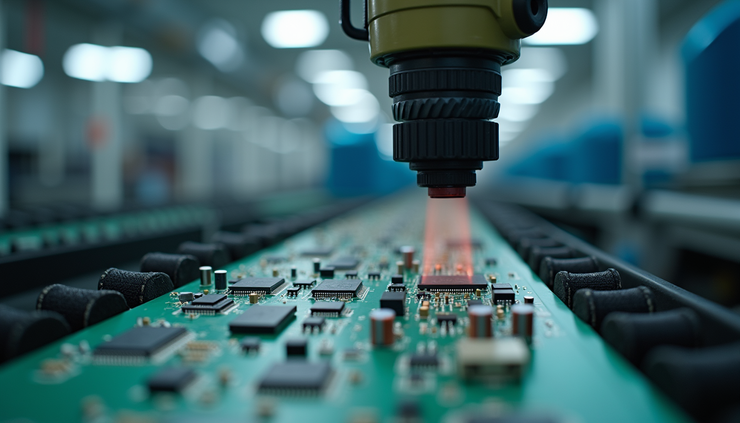
Quality control is critical but often slow and prone to human error. AI-powered vision systems inspect products on the assembly line with superhuman accuracy. These systems identify micro-defects invisible to the naked eye, such as tiny cracks or surface irregularities.
Automating inspection lines with AI reduces waste and rework by catching defects early. A consumer electronics factory reported a 25% drop in defective units after deploying AI vision inspection. This improvement not only cut costs but also enhanced customer satisfaction.
How it works:
High-resolution cameras capture product images
AI models analyze images instantly for defects
Automated rejection or sorting of faulty items
Smart Factories with Self-Optimizing Production | Revolutionizing Manufacturing with AI
The concept of the smart factory involves AI systems that continuously learn and adjust production processes without human intervention. AI monitors machine parameters and workflow data, then makes real-time adjustments to improve efficiency and output quality.
For example, an electronics manufacturer used AI to automatically tune machine settings based on product type and environmental conditions. This led to a 15% increase in throughput and a 10% reduction in energy consumption. Smart factories represent the foundation of Industry 4.0, where manufacturing becomes more flexible and adaptive.
Features include:
Automatic adjustment of machine parameters
Real-time workflow optimization
Continuous learning from production data
AI-Driven Supply Chain Optimization
Supply chains are complex and sensitive to demand fluctuations. AI helps manufacturing companies forecast demand more accurately and optimize logistics from raw materials to finished goods delivery. This reduces overstock, prevents shortages, and cuts transportation costs.
For instance, a global appliance maker used AI-driven demand forecasting to reduce inventory holding costs by 20%. AI also optimized delivery routes, saving fuel and improving delivery times. These improvements directly impact revenue and customer satisfaction.
Benefits of AI in supply chains:
Precise demand forecasting using historical and external data
Inventory management to balance stock levels
Route planning for efficient deliveries

Conversational AI for Real-Time Factory Intelligence
Accessing factory data quickly is essential for decision-making on the shop floor. Conversational AI interfaces allow operators and managers to interact with complex data through simple chat commands. Teams can ask questions like “Show downtime report” or “Retrieve SOP for machine X” and get instant answers.
This hands-free, intuitive access to information helps resolve issues faster and supports operators in real time. Factories using conversational AI report improved communication and faster problem-solving. This use case fits well with AI solutions for manufacturing companies that combine retrieval-augmented generation (RAG) and offline AI systems.
Advantages include:
Instant access to reports, manuals, and insights
Support for operators without interrupting workflows
Easy integration with existing factory data systems
AI solutions for manufacturing companies are no longer futuristic ideas but practical tools delivering measurable results. From preventing downtime to improving quality and supply chains, these five AI use cases offer clear paths to stronger, more efficient manufacturing operations. Companies ready to adopt these technologies will gain a competitive edge and build a foundation for future growth.
Conclusion
In today's rapidly evolving technological landscape, businesses are increasingly seeking innovative solutions to stay competitive and meet the demands of their customers. At Felamity Technologies, we understand the importance of leveraging cutting-edge technology to drive efficiency, enhance user experience, and foster growth for Revolutionizing Manufacturing with AI. Our team of experts is dedicated to providing tailored solutions that address the unique challenges faced by various industries. Whether it's through advanced software development, data analytics, or cloud computing, we are committed to delivering high-quality services that empower our clients to achieve their goals. Felamity Technologies, you can rest assured that you are not just adopting a solution, but embarking on a transformative journey that will position your business for success in the digital age. Let us help you unlock your potential and navigate the future with confidence.


Comments